
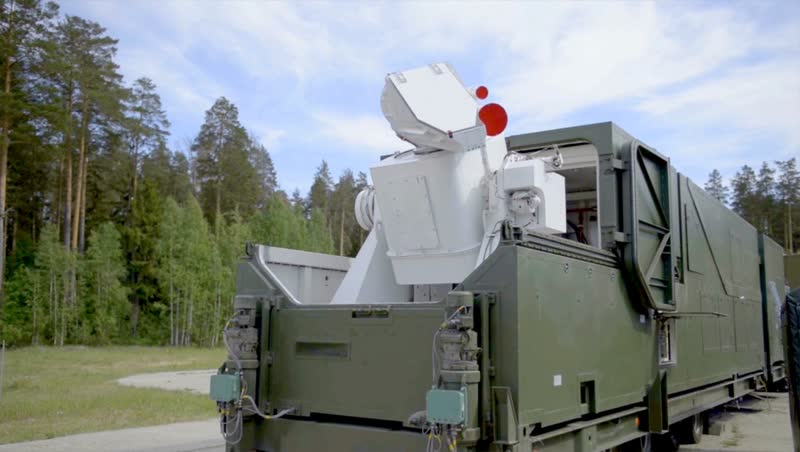
Peresvet-M
Starlink/SATCOM jammer (site protection)
Russian jammer against Starlink terminals, fielded after Starlink was cut off for Russian units in February 2026. According to Ukrainian adviser Serhii “Flash” Beskrestnov, the system floods the terminal's uplink channel and denies Starlink over about 20 km² — a local protective bubble around key sites, including in Crimea. Bulky and power-hungry, and therefore a target itself: Ukraine claims to have destroyed at least five such jammers since June 2026. Not to be confused with the Peresvet laser system. Claims from the Ukrainian side, not independently confirmed.
Learn more in the AirDefense Academy →General
- Role
- Denying Starlink/LEO SATCOM to the opponent
- Target
- Starlink terminals (uplink channel)
- Deployment
- Site protection, incl. in Crimea (2026)
Performance
- Effect area
- ≈ 20 km² (according to Beskrestnov)
- Power
- High power demand; switched from generator to the power grid around Sep 2026 (according to Ukraine's 422nd Unmanned Systems Regiment)
Threat
- Effect
- Local loss of Starlink links for drones and C2
- Vulnerability
- Powerful emitter + heavy power supply: findable with ESM and attackable, including via its power supply
- Threat level
- Medium — local effect, scale-up uncertain
- Source
- Kyiv Independent, 23 Sep 2026 — RU Mil Tracker e-20260924-03; Ukrainian claims, not independently confirmed
News archive 1
Analysed reports from the RU Mil Tracker about this system, newest first. Archive since 2026-07-17.
-
Russia adapts to Ukraine's middle-strike drone campaign with mobile fire groups, Rubicon interceptors and Starlink jammers
According to a Kyiv Independent field report from the southern front, Russian forces have adapted to Ukraine's expanded "middle strike" campaign. That campaign uses drones against targets from roughly 35 km (the end of FPV range) out to about 300 km behind the line. Within weeks of the campaign being scaled up in the south, Russia changed logistics routes a…